Spotlight on Bi Gan
Kaili Blues (2015)
Long Day’s Journey Into Night (2018)
Resurrection (2025)
Very few directors can make their mark in international
cinema with just a handful of films. In Bi Gan’s case, he was able to establish
himself after just 2 features. Bi Gan got plenty of film festival love with his
debut feature Kaili Blues but it was Long Day’s Journey Into
Night that led to analysis of his technical style and visual wizardry. Resurrection
has just increased those discussion and analysis points. Safe to say, the next
Bi Gan film will have a much higher anticipation level.
The Bi Gan Long take
Any discussion about Bi Gan’s cinema will invariably feature
his usage of long takes. Kaili Blues has a virtuoso 41-minute
handheld sequence, Long Day’s Journey Into Night has a 50+ minute
3D shot and Resurrection has a 30-minute-long sequence. This has
become his cinematic signature and his usage is different in each film. In Kaili
Blues, the long take provides a thrilling immersive technical wonder while
the long take in Long Day’s Journey provides an emotional mesmerizing
experience. Resurrection combines both sentiments as the long starts
off as a technical flourish before depicting passage of time, a melancholic aspect
that is applicable to both the characters and to the overall film arc.
In Dennis Lim’s excellent interview, Bi Gan explains his
usage of long take in all 3 films:
Memory, Time and Space
Bi Gan’s first two films, Kaili Blues and Long
Day’s Journey Into Night, blended both past and present in depicting
its events. Resurrection adds an imagined future to proceedings
and thereby completes a time loop where the past and future are linked.
Memories have always played a part in Bi Gan’s films but they take on a much
more central role in Resurrection as the film imagines a future
where dreaming no long exists and therefore, memories become a vital currency.
The budget and production quality has increased with each
film but that has been inversely proportional to the story, meaning the story and
narrative structure has decreased with each film. Kaili Blues is
the closest to an actual story framework (even though it meshes past-present)
while Long Day’s Journey Into Night has a much more fluid narrative
framework and Resurrection has different chapters to outline
events with a thread connecting all the chapters. Of course, it goes without
saying that Bi Gan’s films are not traditional story driven films. His films
are powered by the combination of stories with technical flourishes that result
in an immersive cinematic experience.
Ranking Bi Gan’s films by cinematic experience
I have been fortunate to have seen all 3 films in an actual
cinema. So I can rank them based on actual cinematic experience.
1. Long Day’s Journey Into Night (2018)

A hypnotic mesmerizing experience enhanced by the switch from
2D to 3D. This was also the first film that I have seen which required a switch
from 2D to 3D, cleverly timed with a character putting on 3D glasses in the
film. Once the character puts on his 3D glasses, that was a cue for the
audience to put on their own 3D glasses.
2. Kaili Blues (2015)
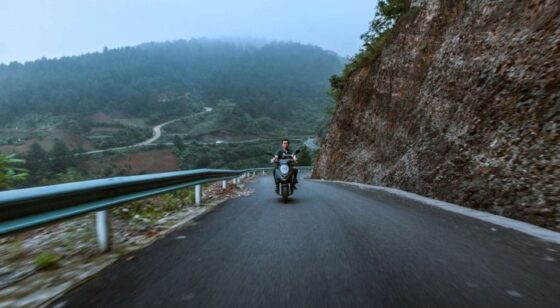
The technical wonder of the 41-minute unbroken sequence was
a joy to witness. Going into the film, I was aware of this sequence but it was impactful to view different ways
to depict a sequence without cutting.
3. Resurrection (2025)
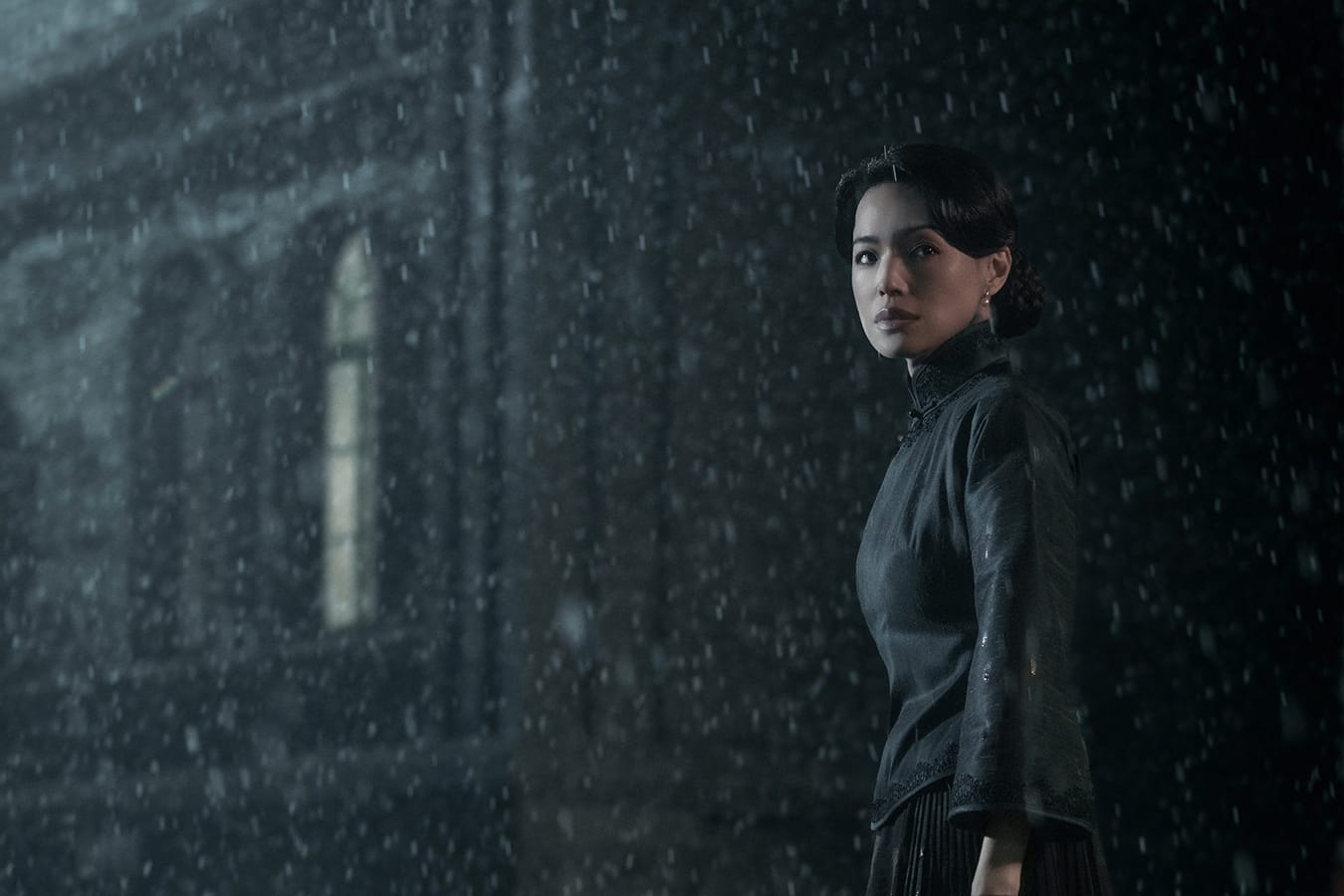 |
| Resurrection, Courtesy Janus Films |
Lovely to see a journey through cinema, especially the
inclusion of silent cinema sequence which paid homage to German expressionist
cinema. The final sequence of a changing China reminded me of Jia Zhang-ke’s
cinema, especially Still Life (2006).
Other Reading
No comments:
Post a Comment