Spotlight on the Fast and Furious movies
The idea of jotting down notes and ranking the Fast
and Furious movies came after reading Barry Hertz’s fast-paced engaging
“Welcome to the Family”, a behind the scenes story of how this franchise came
to be.
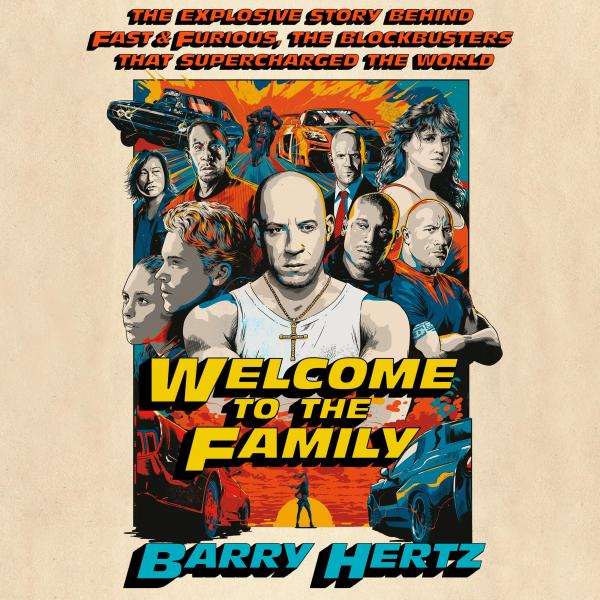
Hertz’s book isn’t a critical analysis of the movies nor is an authorized studio book but instead is based on “more than 170 interviews, both attributed and on background, conducted between January 2024 and June 2025” as stated in the Author’s note at the start of the book. Welcome to the Family gives insights into the preproduction, filming and post-production of all 10 movies to-date and also to many other potential scripts, ideas left out of the final cut. The focus is naturally the Fast movies but the book also gives a perspective on how studio films are made and how many never see the light of day. The countless script re-writes, the multiple takes, production challenges and the many egos (actors, studio execs) illustrate that making a studio film is not every film director’s cup of tea, in a similar manner to how managing Real Madrid is not every soccer manager’s forte. These boardroom decisions and schedule changes help shed a light on why the final version of the movies look as good/bad as they do. Still, incredibly studio movies are released mostly on time and some of them end up being good. The same can’t be said of all the 10 films in the Fast and Furious franchise and Barry Hertz’s book describes why some of them fail to work and why some characters keep coming back. Now, even though I think many films in this franchise don’t work, the movies have made a lot of money and that is part of the reason this franchise has gone on for so long. But the end of the road is surely near with 10 films in the books, 11 including one spinoff movie.
All 10 Feature Films in order of release:
The Fast and the Furious (2001, Rob Cohen)
2 Fast 2 Furious (2003, John Singleton)
The Fast and the Furious: Tokyo Drift (2006, Justin Lin)
Fast & Furious (2009, Justin Lin)
Fast Five (2011, Justin Lin)
Fast & Furious 6 (2013, Justin Lin)
Furious 7 (2015, James Wan)
The Fate of the Furious (2017, F. Gary Gray)
F9 (2021, Justin Lin)
Fast X (2023, Louis Leterrier)
There was also the spinoff movie Hobbs & Shaw
released in 2019 (David Leitch). There were 2 additional short films made as
preludes in between the movies as well.
In terms of sequence, the 10 feature films are in the
following chronological order:
F1, F2, F4, F5, F6, F3, F7, F8, F9, F10.
Justin Lin has clearly helped give direction to the
franchise directing a total of 5 films and he started the 10th film
as well before leaving.
Ranking of all 10 Feature films in order of preference:
1. The Fast and the Furious: Tokyo Drift (2006, Justin Lin)
At first, this film stood in its own separate universe but was
ultimately tied to the larger Fast universe by 2 things: Han’s character (played
by Sung Kang) and a late cameo by Vin Diesel. In some aspects, this film shares
the underground car racing culture and youth sensibilities of Rob Cohen’s first
film The Fast and the Furious. Yet, Tokyo Drift is elevated due to the ridiculously
jaw-dropping drift sequences. The film was the first in the franchise to leave
the US and highlighted the global appeal of the franchise. As per Barry Hertz’s
book, this film made more money internationally than at the domestic box office impacting
the fate of future movies in the franchise.
2. The Fast and the Furious (2001, Rob Cohen)
The original film feels like a breath of fresh air now
considering the larger than life production of the later films in the
franchise. Fast 1 feels like an indie movie made by a studio as opposed to a
traditional studio film. Hertz’s book emphasizes this as well that the studio
didn’t keep a close eye on this film and that allowed Rob Cohen far more creative
control than what John Singleton had for the 2nd movie.
3. Fast Five (2011, Justin Lin)
The 5th movie feels like the first tentpole franchise of Fast
and Furious and assembles key characters from all past films while
introducing Dwayne Johnson to the mix.
4. Fast & Furious 6 (2013, Justin Lin)
The global journey of the Fast and Furious movies continued
with this film adding another villain to the mix.
5. Furious 7 (2015, James Wan)
This film was clearly overshadowed by the real-life death of
Paul Walker but the film also added Jason Statham to the series although
Statham’s character was introduced in the end-credits of F6. This really should
have been the last film in the franchise as it provided a natural offramp but the franchise raced on ahead.
6. 2 Fast 2 Furious (2003, John Singleton)
This is the only film in the series not to feature Vin
Diesel at all and feels like a throwback to the old Hollywood studio films of the
1980-90s. The 2nd movie feels completely different in tone from the first movie and comes
across as a mob movie with cars as opposed to the car-centric first movie. F2 is
also one of the earliest movies of Eva Mendes’ career.
7. Fast & Furious (2009, Justin Lin)
The 4th film in the series is also the first
where larger-than-life stunts start appearing. The film also warps the timeline
of the series with Han’s character making an appearance after he was killed in
the 3rd film which immediately signaled the film follows the 2nd
movie.
8. F9 (2021, Justin Lin)
By this point, the globe trotting and stunts had become too
large for the overall framework. That point depicted by a car going into space.
John Cena was added to the franchise as Dom’s long-lost brother.
9. The Fate of the Furious (2017, F. Gary Gray)
The 8th film is really fighting for last place.
Charlize Theron Cipher villain character is shown to be a criminal mastermind, but her character
is in the wrong franchise and feels like someone who operates in the Bond universe.
10. Fast X (2023, Louis Leterrier)
Awful. Plain awful. That is not entirely down to director Louis Leterrier (The Transporter, Transporter 2, Now You See Me) but to an awful script and hasty production decisions even by the franchise’s fast-paced standards. Leterrier wasn't the original director tied to the movie and came on only after Justin Lin departed.
Not everything is a throw away in the film. Jason Momoa does liven things up as the supervillain son of Fast Five's villain. Unfortunately, any shred of good that exists in the movie is wasted by an un-needed cliffhanger but even that decision predates Fast X. It is anybody’s guess if the film's finale will ever be made but given the money at stake, it may finally emerge from the assembly line.

