Pages

Showing posts with label Bi Gan. Show all posts

Sunday, March 15, 2026

Bi Gan's Cinema

Spotlight on Bi Gan

Kaili Blues (2015)

Long Day’s Journey Into Night (2018)

Resurrection (2025)

Very few directors can make their mark in international cinema with just a handful of films. In Bi Gan’s case, he was able to establish himself after just 2 features. Bi Gan got plenty of film festival love with his debut feature Kaili Blues but it was Long Day’s Journey Into Night that led to analysis of his technical style and visual wizardry. Resurrection has just increased those discussion and analysis points. Safe to say, the next Bi Gan film will have a much higher anticipation level.

The Bi Gan Long take

Any discussion about Bi Gan’s cinema will invariably feature his usage of long takes. Kaili Blues has a virtuoso 41-minute handheld sequence, Long Day’s Journey Into Night has a 50+ minute 3D shot and Resurrection has a 30-minute-long sequence. This has become his cinematic signature and his usage is different in each film. In Kaili Blues, the long take provides a thrilling immersive technical wonder while the long take in Long Day’s Journey provides an emotional mesmerizing experience. Resurrection combines both sentiments as the long starts off as a technical flourish before depicting passage of time, a melancholic aspect that is applicable to both the characters and to the overall film arc.

In Dennis Lim’s excellent interview, Bi Gan explains his usage of long take in all 3 films:

The long take has become a signature of yours. Would you say it is used to different effect in each of your films? 

I was not planning to use a long take in this movie. But it’s like an alcoholic who says they’re going to quit drinking. When things become difficult, you fall back on what you know. When we started on the doomsday chapter, we didn’t have many resources left, so I decided to go back to my familiar way of shooting with long takes.

In Kaili Blues, what I wanted was to convey the perception of time, not in a scientific way, but as normal people perceive it. For Long Day’s Journey, I used the long take to portray memory, which has a spatial aspect to it—going downward into memory. For this chapter about doomsday in Resurrection, I wanted to film from night through to the next morning. But we didn’t have the resources, so we used the time-lapse technique. For Kaili Blues and Long Day’s Journey, I had more time to build up the atmosphere in the long takes. Here it’s only 30 minutes long, so I tried other devices, like moving into a character’s point of view, and color coding. – Dennis Lim, Film Comment, Oct 2025

Memory, Time and Space

Bi Gan’s first two films, Kaili Blues and Long Day’s Journey Into Night, blended both past and present in depicting its events. Resurrection adds an imagined future to proceedings and thereby completes a time loop where the past and future are linked. Memories have always played a part in Bi Gan’s films but they take on a much more central role in Resurrection as the film imagines a future where dreaming no long exists and therefore, memories become a vital currency.

The budget and production quality has increased with each film but that has been inversely proportional to the story, meaning the story and narrative structure has decreased with each film. Kaili Blues is the closest to an actual story framework (even though it meshes past-present) while Long Day’s Journey Into Night has a much more fluid narrative framework and Resurrection has different chapters to outline events with a thread connecting all the chapters. Of course, it goes without saying that Bi Gan’s films are not traditional story driven films. His films are powered by the combination of stories with technical flourishes that result in an immersive cinematic experience.

Ranking Bi Gan’s films by cinematic experience

I have been fortunate to have seen all 3 films in an actual cinema. So I can rank them based on actual cinematic experience.

1. Long Day’s Journey Into Night (2018)

A hypnotic mesmerizing experience enhanced by the switch from 2D to 3D. This was also the first film that I have seen which required a switch from 2D to 3D, cleverly timed with a character putting on 3D glasses in the film. Once the character puts on his 3D glasses, that was a cue for the audience to put on their own 3D glasses.

2. Kaili Blues (2015)
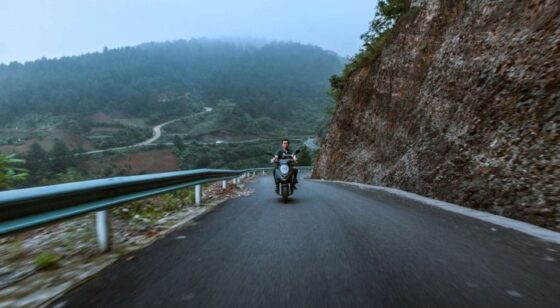
The technical wonder of the 41-minute unbroken sequence was a joy to witness. Going into the film, I was aware of this sequence but it was impactful to view different ways to depict a sequence without cutting.

3. Resurrection (2025)
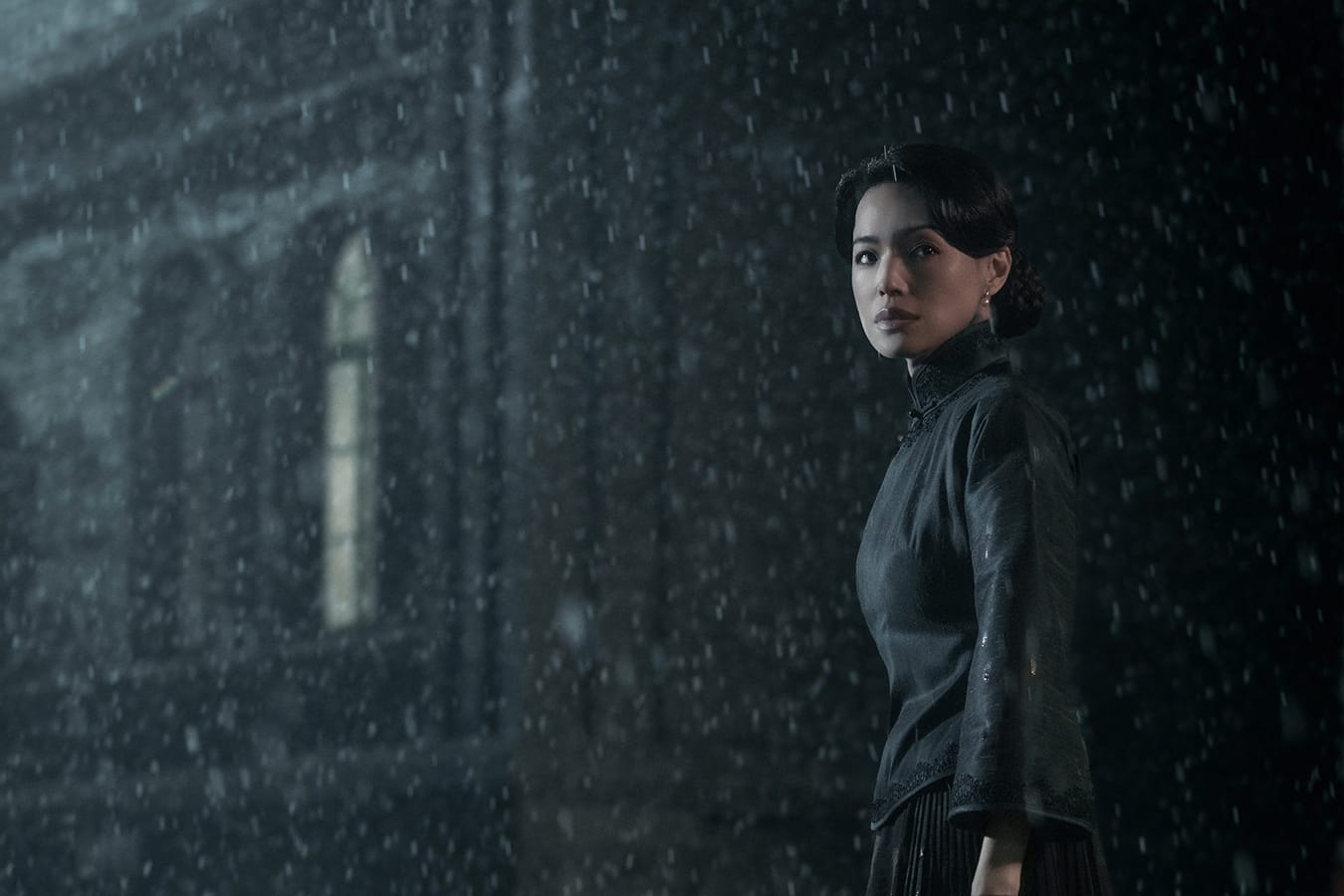
Resurrection, Courtesy Janus Films

Lovely to see a journey through cinema, especially the inclusion of silent cinema sequence which paid homage to German expressionist cinema. The final sequence of a changing China reminded me of Jia Zhang-ke’s cinema, especially Still Life (2006).

Other Reading

1. Dennis Lim, Film Comment

2. Shelly Kraicer on Kaili Blues, Cinema Scope

3. Nick Schager on Kaili Blues, Variety

Tuesday, January 01, 2019

Best Films of 2018

2018 was an extremely strong year for world cinema due to many established auteurs releasing their films coupled with stellar works from emerging directors. Quite a few of these films made their debut at Cannes, which was the strongest in a decade. This year at Cannes there were films by Wang Bing, Nuri Bilge Ceylan, Lee Chang-dong, Nandita Das, Asghar Farhadi, Bi Gan, Matteo Garrone, Jean-Luc Godard, Ryûsuke Hamaguchi, Hirokazu Kore-eda, Nadine Labaki, Spike Lee, Sergey Loznitsa, Jafar Panahi, Pawel Pawlikowski, Alice Rohrwacher, Lars von Trier, Wim Wenders and Jia Zhang-ke. As a result, there is a big influence of the Cannes film festival on this list. 12 of the 20 films in this list premiered at Cannes including 7 out of the top 10 films. However, this end of the year list includes just a fraction of the worthy films that showed at Cannes and other film festivals in 2018. There are still more than a dozen essential 2018 films that I missed seeing and will likely spend the better part of 2019 catching up with.

Note: the Top 10 and Honourable mentions is restricted to only 2018 titles.

Top 10 films of 2018

1. Transit (Germany/France, Christian Petzold)

Christian Petzold’s masterful adaption of Anna Seghers’ 1942 book is a cinematic treat! With just a few tweaks, Petzold has ensured that there is a constant tension between the past and present in the film. This balance between past-present highlights how history repeats in cycles and shows that a book written almost 80 years ago speaks to today’s world situation. This is because throughout history there are always people or communities that are persecuted and forced to leave their homes. The film is further elevated by a haunting love story, one which references Casablanca with hints of Kafka and Beckett.

2. Burning (South Korea, Lee Chang-dong)

Burning, Lee Chang-dong’s cinematic return after a gap of 8 years, smartly transforms a Haruki Murakami short story into a seductive thriller that lingers in the memory long after the credits.


3. Long Day’s Journey Into Night (China, Bi Gan)

Bi Gan’s sumptuous film provides an emotional ride across space and time by mixing past, present and dreams.

4. The Wild Pear Tree (Turkey co-production, Nuri Bilge Ceylan)

Ceylan has combined the visual strength of his previous films with a meaty narration resulting in a tour de force which covers topics ranging from literature, religion, romance, philosophy to politics.

5. An Elephant Sitting Still (China, Hu Bo)

Hu Bo’s first and only feature was one of the most emotionally devastating films of the year. Shortly before the film was completed, 29 year old Hu Bo committed suicide. He didn’t live to see the film’s World Premiere at the 2018 Berlin Film Festival where it was extremely hard to secure a ticket to see this almost 4 hour film. Such is the strength of Hu Bo’s artistry that the film’s length is never felt. Instead, one is drawn into the lives of the four characters in Northern China and invested in their fate.

6. Sir (India/France, Rohena Gera)

Rohena Gera’s astute film gets at the core of what we seek in relationships and what causes two people from radically different backgrounds to form a connection. The end result is one of the most charming films of the year lit by a vibrant performance by Tillotama Shome.

7. Fausto (Canada/Mexico, Andrea Bussmann)

Canadian director Andrea Bussmann creatively uses the text of Goethe’s Faust as a jumping point to explore myths, local legends and tales in Mexico’s Oaxaca coast. The decision to use low light for shooting many of the scenes results in a shape-shifting film that strips away the concept of time; the film could be set decades in the past or could be contemporary. The end result is exhilarating as the film shows a unique way to perceive history and cultures.

 
8. Donbass (Ukraine co-production, Sergey Loznitsa)


Sergey Loznitsa cleverly depicts how events in Ukraine are influenced by the overarching influence of Russia. An urgent film that also depicts how the media is being manipulated by politicians resulting in further blurring between real and fake news.


9. Ash is Purest White (China, Jia Zhang-ke)

 Jia Zhang-ke’s newest film is a perceptive depiction of the Chinese landscape, both social and economical, over the course of two decades.

10. Another Day of Life (Poland/Spain/Belgium/Germany/Hungary, Raúl de la Fuente and Damian Nenow)

Based on late journalist Ryszard Kapuscinski’s book of the same name, Another Day of Life is a fascinating mix of documentary and animation that captures the energy of Kapuscinski’s book about the Angolan civil war.

 
Honourable Mentions (alphabetical order):


3 Faces (Iran, Jafar Panahi)
BlacKkKlansman (USA, Spike Lee)
Closing Time (Germany/Switzerland, Nicole Vögele)
Cold War (Poland/UK/France, Pawel Pawlikowski)
Dear Son (Tunisia/Belgium/France/Qatar, Mohamed Ben Attia)
Djon Africa (Portuga/Brazil/Cape Verde, João Miller Guerra and Filipa Reis)
The Image Book (Swtizerland/France, Jean-Luc Godard)
Grass (South Korea, Hong Sang-soo)
Roma (Mexico/USA, Alfonso Cuarón)
Season of the Devil (Philippines, Lav Diaz)

Notable 2016 and 2017 films seen in 2018 (alphabetical order):


Gabriel and the Mountain (2017, Brazil/France, Fellipe Barbosa)
The Great Buddha+ (2017, Taiwan, Huang Hsin-yao)
Hotel Salvation (2016, India, Shubhashish Bhutiani)
Machines (2016, India/Germany/Finland, Rahul Jain)
Phantom Thread (2017, USA/UK, Paul Thomas Anderson)
The Unknown Girl (2016, Belgium/France, Jean-Pierre Dardenne and Luc Dardenne)
The Woman who Left (2016, Philippines, Lav Diaz)