Pages

Showing posts with label Independent Cinema. Show all posts

Monday, August 10, 2026

John Sayles' Independent Cinema

Spotlight on the films of John Sayles:

Return of the Secaucus Seven (1979)

The Brother from Another Planet (1984)

Matewan (1987)

Eight Men Out (1988)

Lone Star (1996)

Silver City (2004)

Honeydripper (2007)

The idea for this spotlight came after discovering that TIFF was doing a retrospective of John Sayles this past summer. Barry Hertz’s insightful interview highlighted that it has been 13 years since John Sayles last directed feature, Go for Sisters (2013). That is a long gap although Sayles has been busy in the meantime, working on his novels and screenplays. The interview does highlight the difficulty Sayles and his producer partner Maggie Renzi have had in getting funds to make a film. Although, the interview also highlights this isn’t a new problem:

"But though it once took Sayles and Renzi 11 years to watch their baseball drama Eight Men Out go from page to screen, the pair now finds themselves facing an even more patience-testing environment, where wait-and-see is the rule, not the exception."

If the pair had a hard time getting money back in the 1980s, then it shouldn't be a surprise they are struggling to get money now because movie making is a business now and independent cinema isn’t what it used to be. Commercial cinema is packed with sequels and streamers put money up for material driven by algorithms. In such an environment, an independent lone star like John Sayles would easily stick out.

Story driven cinema

John Sayles’ films are story driven works. That is understandable as he started his film career writing screenplays and he has 8 novels to his name along with 2 short story collections. Having a strong story also gives space for actors to shine and that is apparent in the 7 films as part of this spotlight. In fact, many famous actors got their break with John Sayles as David Strathairn made his debut in Sayles’ debut feature Return of the Secaucus Seven, Chris Cooper made his feature film debut in Matewan. Both collaborated with Sayles on subsequent features as well. Matthew McConaughey acted in Lone Star early in his career.

Spotlight on American Society

Watching John Sayles films in 2026 is a refreshing experience as it gives a glimpse into how films used to be made. They don’t make cinema like this anymore and unless something changes, it is hard to imagine such films being made again. Each film has a purpose, a story to tell and the characters feel real. The films showcase a slice of American society in a specific era and highlight cultural, social, political and economic situations that impacted the characters.

Eight Men Out looks at economic situations and attitudes in 1919 which led to eight (really seven) Chicago White Sox members to throw away the World Series.  

Matewan looks at the 1920s at a time with unions were starting to form and battle between coal companies and employees. 

Honeydripper captures the blues era of 1950s Alabama. 

Lone Star is a neo-Western film that is set in 1990s Texas but also sheds light on how things were back in the 1950-60s via flashbacks. Sadly, many of the attitudes and racism that existed decades ago can still be found in our contemporary world. 

Return of the Secaucus Seven looks at how promising dreams and hopes of 1960-70s US leads to more sober reflections in the 1980s. 

The Brother from Another Planet is a playful sci-fi film that gives a snapshot of changing attitudes and cultural trends in 1980s, including omnipresent arcades games. 

Silver City captures the absurd stupidity of post George W. Bush America in early 2000s where being a stupid politician had no impact on one’s chances to get elected (that stupidity seems nostalgic in our current idiotic political times).

Ranking all 7 features in order of preference:

1.  Matewan (1987)

2.  Eight Men Out (1988)

3.  Return of the Secaucus Seven (1979)

4.  The Brother from Another Planet (1984)

5.  Silver City (2004)

6.  Lone Star (1996) 

7.  Honeydripper (2007)

Sunday, February 15, 2026

The Films of Nina Menkes

Spotlight on Nina Menkes

A long overdue spotlight on Nina Menkes focuses on 5 of her 6 directed features to date plus her second short film.

The Great Sadness of Zohara (1983, 38 min short)

Magdalena Viraga (1986)

Queen of Diamonds (1990)

The Bloody Child (1996)

Phantom Love (2007)

Dissolution (2010)

Note: This spotlight is missing her recent feature Brainwashed (2022), which would have completed 6/6 of her feature films directed to date (this doesn’t include Massacre, her co-directed 2005 doc).

The word ‘Visionary’ is so often used to describe the works of a director that it feels overused and misrepresented. However, this word is apt in the case of Nina Menkes as her distinctive style is uncompromising and stands apart from her contemporaries. So far, she has only directed 6 feature films over the span of 36 years. That works out to an average of 1 film per 6 years. Although, there is a significant gap of 12 years between Dissolution and Brainwashed. Each film is unique on its own, but some common threads/elements emerge over these 6 films in this spotlight.

Isolation, Alienation and a Female Perspective

Cinema is full of examples of isolated and alienated male characters who are then driven to violence or self-destruction as a means of coping with their situation. Nina Menkes offers a differing perspective by focusing on isolated female characters. In her films, the female characters are observed as they navigate their challenging environments and try to cope with their lives. The films are stripped of any overdramatic moments or violence but instead layered with dreams (such as Phantom Love), symbolism (Phantom Love, Queen of Diamonds, Magdalena Viraga) which allows an insight into the character’s emotional and mental state. Interestingly, the only film from these 6 to feature an outright male lead (Dissolution) does feature a violent act but that is kept off screen with the film instead focusing on the daily boredom, isolation of the male character.

Experimental Narrative, Surrealism, Fantasy

Nina Menkes’ films are non-linear and don’t follow regular conventions of a narrative structure. One won’t find a three-act structure in any of these films. In addition, some of the films use dreams and symbolism to blur the boundaries between reality and fantasy which helps give an insight into the character’s mental state.

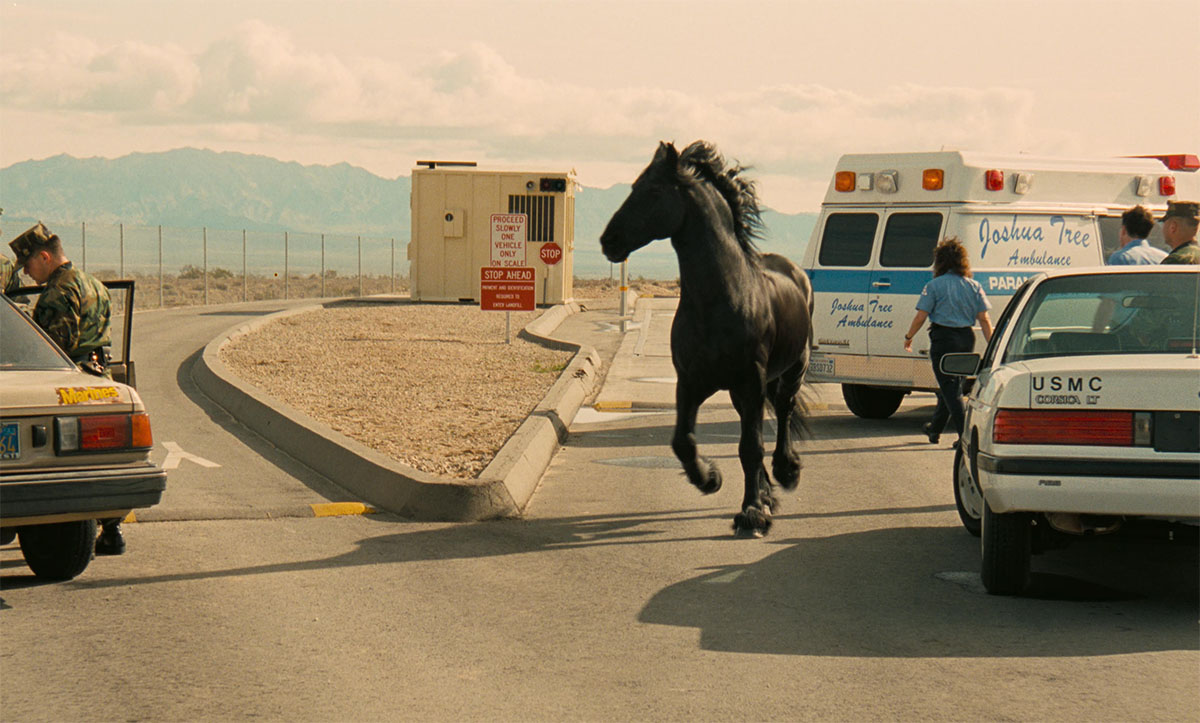
The Bloody Child is a perfect example to contrast her style with that of other directors. The film is based on a real-life event where a young US Marine killed his wife after his return from the Gulf War. Many films have dealt with the violent aftermath of returning soldiers, yet Menkes doesn’t present events in a straightforward narrative. Instead, the film uses repeated scenes which emphasize the constant abuse of power and violence that is drilled into the soldiers in their day-to-day operations, which seeps into their core.

Collaboration with Tinka Menkes

A notable aspect of Menkes’s filmmaking is her immensely creative collaboration with her sister, Tinka Menkes. Tinka acted in 5 of Nina’s films: A Soft Warrior (Nina’s debut short), The Great Sadness of Zohara, Magdalena Viraga, Queen of Diamonds, The Bloody Child. In addition, the two sisters co-edited Queen of Diamonds and The Bloody Child.

Ranking the films of Nina Menkes in order of preference:

1. Phantom Love (2007)

Phantom Love, Courtesy Arbelos Films

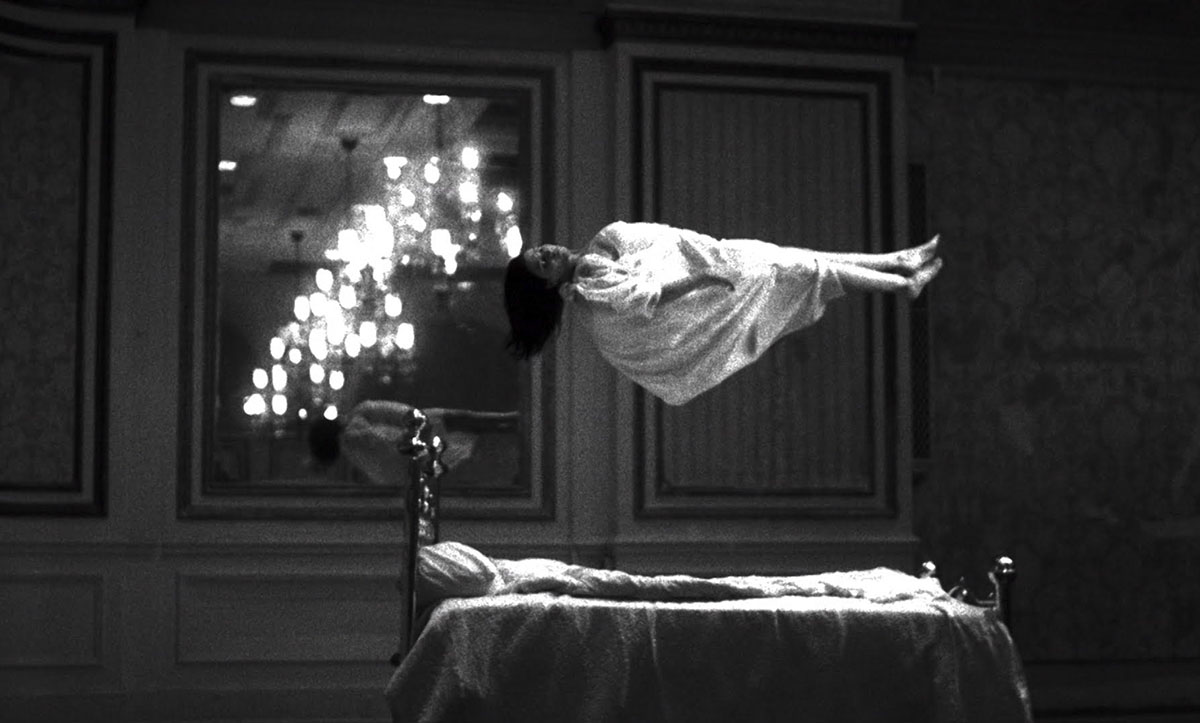
A hypnotic mesmerizing film that echoes shades of Béla Tarr and David Lynch yet is clearly Menkes' distinct style. The usage of black and white works perfectly as it helps give the illusion of events taking place in the same location. Yet, it is still very hard to hide the distinctive look of Rishikesh (India). The film contains many memorable images, one of them being snakes in the hallway.

2. Magdalena Viraga (1986)

Nina’s debut feature film helps set the tone for her style: non-linear structure, symbolism, minimal dialogue, use of repeated scenes to emphasize mental state of characters.

3. Queen of Diamonds (1990)

Queen of Diamonds, Courtesy Arbelos Films

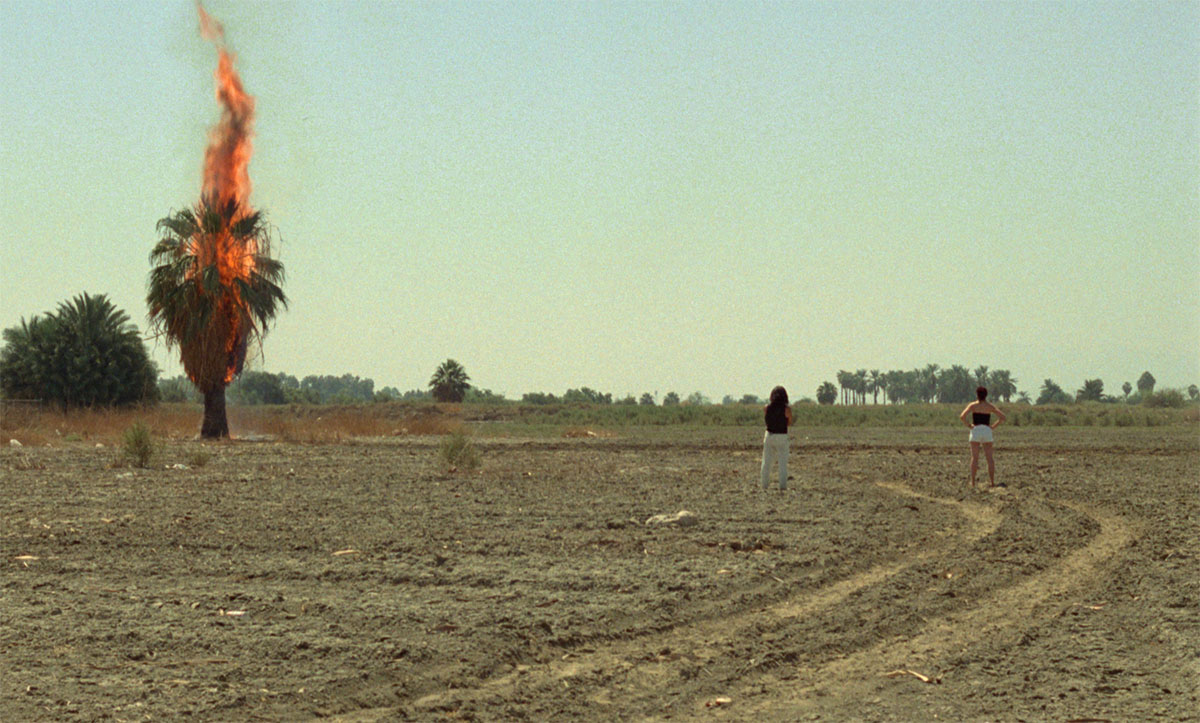
Las Vegas has never looked so different in a film! Majority of the films set in Vegas glamorize the gambling and constant lights of the city, yet Nina & Tinka Menkes showcase the dullness and repetitive aspect of being a card dealer. Plus, the film contains many stellar images such as that of the burning palm tree.

4. Dissolution (2010)

Loosely based on Dostoevsky’s Crime and Punishment, Dissolution is the first of Nina Menkes’ films to feature a male lead. Yet her style of using repeated images highlights the isolation of the male character leading to his violent act.

5. The Great Sadness of Zohara (1983)

The film starts and ends in Jerusalem with a trip to North Africa in the middle. It is hard to believe that this was Nina Menken’s student film made on a shoe-string budget. The North African sequences reminded me of Oliver Laxe’s North African set films such as You All Are Captains (2010), Mimosas (2016) even though Menkes shot her film almost three decades before Laxe made his debut.

6. The Bloody Child (1996)

The Bloody Child, Courtesy Arbelos Films

The non-linear structure made me recall the experience of Harun Farocki’s “Images of War” exhibition (2011-12). In Farocki’s installation, a loop repeated images of a simulated war and it didn’t matter at which point one started to see the film as one could get the intent behind the simulation. Similarly, Menkes’ film showcases repeated images and one can get the sense of proceedings based on just a few sequences.