Pages

Sunday, August 13, 2023

The Films of Ulrich Seidl

Films seen or revisited as part of this spotlight:

Models (1999)
Dog Days (2001)
Import / Export (2007)
Paradise: Love (2012)
Paradise: Faith (2012)
Paradise: Hope (2013)
In the Basement (2014)
Rimini (2022)


Boredom. Alienation. Despair. Misery. Helpless. Depression.

The above words can be used to describe the mental state that majority of characters experience in Austrian director Ulrich Seidl's films. His films are not known for depicting happy, cheerful characters. With the exception of Models, the characters in most of his other films are rarely depicted in cinema. They are characters that are on the outskirts of society who don’t find themselves in situations where a positive outcome will occur. The same can apply to subjects in his documentaries as well.

Ulrich Siedl is not a subtle director who lets viewers imagine things on their own by leaving non-relevant items out of the frame. In his films, the camera continues to focus on characters in their moments of weakness, awkwardness or rock bottom. In addition, his fictional films feature a mix of professional and non-professional actors. All of this gives his films a vérité or realistic feel. The works can come across as Docudrama in some cases as well.

Dog Days (2001)

Boredom:

Bright hot sunny days. Just another day in the suburbs. Nothing ever really happens. Silence and Sun. How to rid of the boredom?

Trim the hedges.


Or just sit around the pool.

Or one can engage in boring mechanical sex orgies.

A microcosm of a nation or an independent culture existing within a nation?

Ulrich Seidl's Dog Days is set in an Austrian suburb. But nothing in the film can be used to describe Austria itself -- the people depicted in the suburbs may be fictional characters or based on real life individuals but their stories can't be used as a lens to observe an entire culture. But can a suburb ever represent a culture? Even though American Beauty was praised for highlighting the suburban life, it was not representative of the American culture. Director Sam Mendes and writer Alan Ball could easily have portrayed a different set of happier and more confident characters who lived on the other side of the street. Similarly, Ulrich Seidl could have focused on characters who didn't live such bleak and depressive lives. But happy characters don't present audiences with many intelligent challenges. Not to mention that misery tends to win more awards!

Import/Export

Import Export looks at the lives of two characters who cross the border to make a living -- Olga leaves Ukraine for Austria while an unemployed Austrian youth heads to find some work in Ukraine. The film is shot in a documentary style which gives realism to many of the sequences. However, in keeping with his in-your-face style, Siedl ensures the camera doesn’t turn away and stays focused on visuals which add nothing to the story, such as being focused in between a woman's leg in the internet porn office. A few decades ago such shots would have ensured critical arthouse praise and described as “edgy”. Now, this tactic and style appears hollow and manipulative. It feels like Seidl has purposely included sequences which push the poverty and helplessness of the character (for example, the choice of jobs that Olga gets helps one to sympathize with her).

Paradise Trilogy


Ulrich Seidl’s Paradise trilogy does mark a high point in his directorial achievement with all 3 films a culmination of his style and methodology. The works stand on their own even though there is a connection between the three female characters in the films. Paradise: Love focuses on Teresa (Margarete Tiesel), whose daughter Melanie (Melanie Lenz) is the main character of Paradise: Hope. Paradise: Faith is about Anna Maria (Maria Hofstätter) who is Teresa’s sister and Melanie's aunt.

The “paradise” in the film’s title represents each character’s sisyphean attempts to get out of their personal never ending hell. However, as the three films show, their attempts to claw out of their hell only pushes them further back down.

Paradise: Love

The best film of the trilogy focuses on Teresa’s trip to Kenya to escape her regular life and engage in sex tourism. The film manages to pack in many vital subjects such as colonialism, racism, capitalism while depicting events with a pinch of dry humour.

Paradise: Faith

Anna Maria is devoted to her religion and seeks salvation in it including self-flagellating herself. Yet, her resolve is tested when her Muslim husband returns.

Paradise: Hope


The third film focuses on Melanie, Teresa’s teenage daughter. Since Teresa is in Kenya and her sister Maria is busy with her religious camps, there isn’t anyone to look after Melanie. So Maria drops Melanie off at a diet camp where overweight teenagers go through drills aimed at changing their ways. There is a coming-of-age aspect to this film as 13-year old Melanie develops feelings of love. Unfortunately, she develops those feelings towards her middle-aged camp counsellor.

Rimini

Richie Bravo (Michael Thomas) makes a living by singing songs and pleasuring elder women at the titular Italian resort. One can tell that Richie’s best musical years are behind him but none of that seems to matter to the women suitors who are willing to pay him for pleasure. Things take a turn when a young woman Tessa (Tessa Göttlicher) appears claiming to be Richie’s daughter and demanding support payments. Richie’s desperate situation and appearance reminds a bit of Mickey Rourke’s Randy character from Darren Aronofsky’s The Wrestler. However, The Wrestler had more dramatic weight as Seidl allows some dry humour to enter the film in keeping with his style.

Changed perspective

Back in the day, I used to look forward to seeing any Ulrich Seidl film that appeared at a film festival. However, that is not the case anymore. Seidl’s style feels one dimensional where he is only interested in showing the misery or desperation of his characters. The script puts the characters in situations where they are stuck at rock bottom. His inclusion of characters on the fringes of society may have been edgy once but feels out of touch now given how the world has changed over the last few years. There is no attempt to look at the societal situation or larger world that the characters find themselves in and how that world impacts their situations.

Tuesday, July 25, 2023

Best Films of 2022

An update to the previously posted Best Films of 2022 list.

Top 12 films of 2022:

1. Pacifiction (France/Spain/Gemany/Portugal, Albert Serra)

An intriguing and refreshing change of landscape, time period and topic from Albert Serra! Pacifiction is not a period piece but a contemporary slow burning tropical espionage film with no guns, no spilled blood but only conversations with a hint of danger. The stunning visuals and hypnotic music elevates the film and adds a layer of mystery reminiscent of Claire Denis’ L’Intrus.

2. Aftersun (UK/USA, Charlotte Wells)

A beautiful yet emotionally devastating film packed with many haunting images, especially the final image which opens a fascinating space between memories, reality and dreams.

3. Return to Seoul (France/South Korea/Cambodia co-production, Davy Chou)

In 2016, I admired parts of Davy Chou’s Diamond Island as its depiction of Cambodia reminded of early Tsai Ming-liang (eg Rebels of the Neon God) and Hou Hsiao-Hsien (due to usage of motorcycle shots). However, his brilliant Return to Seoul is a massive step up and features many intriguing, bewitching sequences. In addition, many emotional weighty scenes are portrayed with a delicate lightness which allows the gravity of the situation to be felt. One of the strongest aspect of the film is the multi-year gaps between events. These gaps feel authentic and realistic as often family issues are unresolved for years because people don’t talk or address things. Instead, people ignore the issues and let them linger. 

4. Matter Out of Place (Austria, Nikolaus Geyrhalter)

Geyrhalter continues his essential depiction of humans impact on our planet. This time, he focuses on the never ending collection of garbage filling our earth and bodies of water. The film recalls Edward Burtynsky’s collaborations with Jennifer Baichawal seen in Manufactured Landscapes (2006), Watermark (2013) and Anthropocene (2018).  

5. My Imaginary Country (Chile/France, Patricio Guzmán)

“How is it possible that I am witnessing a second revolution in Chile?”

Guzmán’s surprising question is remarkable especially when one considers that he has once again documented Chile in a state of unrest almost 5 decades after his famous documentary The Battle of Chile (1975) which depicted the violence that unfolded after Salvador Allende was overthrown by a military coup. The ramifications from that military coup and dictatorship clearly played a part in a decades long eroding of Chilean society which led to the events in 2019 captured by Guzmán.

6. Gehraiyaan (India, Shakun Batra)

Gehraiyaan is a rare precious thing: a mature adult relationship Hindi language film. The gray palette and muted colours perfectly depict the mood of the film which indicates the dangers lurking beneath the surface. Brilliantly acted (Deepika Padukone is mesmerizing) with top notch production values and an infectious soulful track sung by Lothika Jha! 

7. Rule 34 (Brazil/France, Júlia Murat)

Two earlier Júlia Murat films, Found Memories and Pendular, were not adequate preparation for what unfolds in Rule 34. Murat’s newest film pushes the concept of public vs private life to the brink and questions whether any objectivity can exist when the main character Simone (Sol Miranda) carries on living a dual life where her night time activities contradicts her daytime job. There are concepts of law, rules in society, acceptable behaviour, safety, criminality that also need to be unpacked after viewing this film. Sol Miranda has put in a brave and extraordinary performance and her expressions are priceless. This is evident in the film’s ending where the camera looks firmly at her face which goes through an entire range of emotions before her character decides what route she wants to take.

8. Urf/A.k.a (India, Geetika Narang Abbasi)

The film gives a fascinating insight into the Hindi language film industry by depicting the lives of actors who are lookalikes of legendary actors such as Dev Anand, Amitabh Bachchan, Shah Rukh Khan. The honest look into these lookalike actor’s lives raises questions about identity and the God like status some Bollywood movie stars enjoy. As a result, Geetika Narang Abbasi's film provides a new entry point into perceiving Bollywood. 

9. No Bears (Iran, Jafar Panahi)

Any new Panahi film feels like a miracle. He continues to push the boundaries of making cinema within strict restrictions and limitations. This time he travels to the Iranian border and shows how a film can be potentially directed remotely, an appropriate nod to our times where remote work has became a lot more commonplace across the globe. 

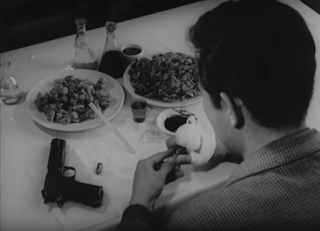
10. EO (Poland/Italy, Jerzy Skolimowski)


Packed with incredible images and a hypnotic soundtrack, Skolimowski’s wonder of a film is a genuine cinematic treat!

11. EAMI (Paraguay co-production, Paz Encina)


As per the film notes, “Eami means ‘forest’ in Ayoreo. It also means ‘world’”. Paz Encina highlights the deforestation and its impact on the indigenous Ayoreo-Totobiegosode community of the Chaco region in Paraguay. Her shape-shifting film is a beautiful audio-visual experience and one of the film highlights of 2022.

12. Stars at Noon (France/Panama/US, Claire Denis)

Claire Denis and co-writers Andrew Litvack and Léa Mysius have taken the core of Denis Johnson’s novel The Stars at Noon about 1984 Nicagragua and adapted it to our current times with some tweaks which remove specific details of which country the film is set in. Tindersticks' soundtrack, a constant in Claire Denis films, enhances the mood and elevates proceedings.

Honourable mention:  

Broker (South Korea, Hirokazu Kore-eda)

Kore-eda continues his exploration of the dynamic two-way relationship between adults and children and what constitutes a family. The Korean setting of the film is missing the usual rhythm and emotional resonance found in Kore-eda’s Japanese films. Still, there is plenty to admire in this film especially the performance of Song Kang-ho.

Friday, June 02, 2023

Best Korean Films of All Time

Top 12 Korean films of all time

1. Aimless Bullet (1961, Yu Hyun-mok)

Yu Hyun-mok expertly incorporates neorealism with some film noir and crime elements while tackling vital socioeconomic elements of Korean society in the Korean war’s aftermath which led to poverty, crime and general disillusionment.


2. The Housemaid (1960, Kim Ki-young)


A remarkable film which long held the #1 Korean film in my all time Korean film list. A precursor to Parasite in its examination of the rich-poor divide sparkled with a few jaw-dropping moments.


3. Right now, Wrong then (2015, Hong Sang-soo)

Love and relationships are two common elements found in Hong Sang-soo’s films with food and alcohol being vital to his film’s flow. Characters often gather at a social gathering where lots of food and alcohol is to be found. Alcohol is a key ingredient in his films, particularly the drink of soju which serves as lubricant in allowing the character’s true feelings to be revealed in a natural manner. In his last few films, Hong Sang-soo has used repetition as a powerful device. He has either shown the same event from different perspectives or repeated the same segment with slight variations. All these elements are found in Right Now, Wrong Then which is divided into 2 films, shown from different perspectives and with slight variations. Each film has its own title with the first film called ‘Right Then, Wrong Now’ while the second film is ‘Right Now, Wrong Then’. The alternate titles and the unfolding of events allow audience to select which film they prefer, and in a way, the audience selection also shows the manner in which they prefer to live their own lives.

4. Burning (2018, Lee Chang-dong)

Burning, Lee Chang-dong’s cinematic return after a gap of 8 years, smartly transforms a Haruki Murakami short story into a seductive thriller that lingers in the memory long after the credits.

5. Memories of Murder (2003, Bong Joon-ho)

Gripping thriller which keeps us guessing and tries to be as objective as possible without diving into contrived situations. The ending is unlike any other ever shown in a Hollywood serial killer flick which is what makes this an excellent movie.

6. Parasite (2019, Bong Joon-ho)

Perfectly blends genre elements with socioeconomic examination of a society.

7. Sympathy for Mr. Vengeance (2002, Park Chan-wook)

Takes time to develop its characters and outline the story before plunging into a series of cuts and stabs to end on a bloody note. This was the first Korean film I saw at a midnight film festival screening and it led to an exciting discovery of tracking down as many Korean films as I could.

8. Breathless (2008, Yang Ik-joon)

Yang Ik-joon’s stellar film shows how a cycle of violence can continue beyond generations and that kids who witness violence in their youth can grow up and re-enact those same episodes onto others.


9. The King and the Clown (2005, Lee Joon-ik)


This was a surprise box-office hit upon its 2005 release so much so that it was the biggest box office movie in Korean history until The Host came along. A simple story with no big budget based on a stage play beat out all the big named commercial films! The story is set in 16th Century Korea where two street performers undertake a risky game to make some money. They decide to lampoon the king and his mistress. Such a thing was never done before but it pays off, initially at least among the common folk. However, the king is not amused and wants to punish the street troupe. The lead person asks for one chance – if the king laughs, the troupe be spared. Well the king does laugh, a little at first and a lot over time as he makes the troupe perform only privately for royalty. Such a thing does not go down well with the ministers but the king does not care as he seems to be pre-occupied with a crush on one of the performers. Excellent performances all around!

10. A Dirty Carnival (2006, Ha Yu)


A Dirty Carnival breathes new life into the over-worked gangster sub-genre by focussing more on the characters and their relationships.


11. The Day He Arrives (2011, Hong Sang-soo)

The Day He Arrives is vintage Hong Sang-soo and features what one would expect from his films: filmmaker turned professor returning to his hometown, an ex-love, plenty of drinking with friends/strangers. Conversations and confessions flow as effortlessly as the alcohol and naturally people pour their hearts out. Even though there are familiar elements to his previous films, The Day He Arrives is still a wonderfully crafted feature that is shot in black and white, which lends a poetic beauty to the snowy streets.

12. Spring, Summer, Autumn, Winter..and Spring (2003, Kim Ki-duk)

After Park Chan-wook, it was the cinema of Kim Ki-duk that became my window into Korean cinema in the early 2000s. This was the first of his films that I saw and it proved to be a contemplative experience. Broken into 5 segments as per the title, this film is a visually meditative film that evokes multiple emotions including awe and sadness.