Pages

Sunday, March 15, 2026

Bi Gan's Cinema

Spotlight on Bi Gan

Kaili Blues (2015)

Long Day’s Journey Into Night (2018)

Resurrection (2025)

Very few directors can make their mark in international cinema with just a handful of films. In Bi Gan’s case, he was able to establish himself after just 2 features. Bi Gan got plenty of film festival love with his debut feature Kaili Blues but it was Long Day’s Journey Into Night that led to analysis of his technical style and visual wizardry. Resurrection has just increased those discussion and analysis points. Safe to say, the next Bi Gan film will have a much higher anticipation level.

The Bi Gan Long take

Any discussion about Bi Gan’s cinema will invariably feature his usage of long takes. Kaili Blues has a virtuoso 41-minute handheld sequence, Long Day’s Journey Into Night has a 50+ minute 3D shot and Resurrection has a 30-minute-long sequence. This has become his cinematic signature and his usage is different in each film. In Kaili Blues, the long take provides a thrilling immersive technical wonder while the long take in Long Day’s Journey provides an emotional mesmerizing experience. Resurrection combines both sentiments as the long starts off as a technical flourish before depicting passage of time, a melancholic aspect that is applicable to both the characters and to the overall film arc.

In Dennis Lim’s excellent interview, Bi Gan explains his usage of long take in all 3 films:

The long take has become a signature of yours. Would you say it is used to different effect in each of your films? 

I was not planning to use a long take in this movie. But it’s like an alcoholic who says they’re going to quit drinking. When things become difficult, you fall back on what you know. When we started on the doomsday chapter, we didn’t have many resources left, so I decided to go back to my familiar way of shooting with long takes.

In Kaili Blues, what I wanted was to convey the perception of time, not in a scientific way, but as normal people perceive it. For Long Day’s Journey, I used the long take to portray memory, which has a spatial aspect to it—going downward into memory. For this chapter about doomsday in Resurrection, I wanted to film from night through to the next morning. But we didn’t have the resources, so we used the time-lapse technique. For Kaili Blues and Long Day’s Journey, I had more time to build up the atmosphere in the long takes. Here it’s only 30 minutes long, so I tried other devices, like moving into a character’s point of view, and color coding. – Dennis Lim, Film Comment, Oct 2025

Memory, Time and Space

Bi Gan’s first two films, Kaili Blues and Long Day’s Journey Into Night, blended both past and present in depicting its events. Resurrection adds an imagined future to proceedings and thereby completes a time loop where the past and future are linked. Memories have always played a part in Bi Gan’s films but they take on a much more central role in Resurrection as the film imagines a future where dreaming no long exists and therefore, memories become a vital currency.

The budget and production quality has increased with each film but that has been inversely proportional to the story, meaning the story and narrative structure has decreased with each film. Kaili Blues is the closest to an actual story framework (even though it meshes past-present) while Long Day’s Journey Into Night has a much more fluid narrative framework and Resurrection has different chapters to outline events with a thread connecting all the chapters. Of course, it goes without saying that Bi Gan’s films are not traditional story driven films. His films are powered by the combination of stories with technical flourishes that result in an immersive cinematic experience.

Ranking Bi Gan’s films by cinematic experience

I have been fortunate to have seen all 3 films in an actual cinema. So I can rank them based on actual cinematic experience.

1. Long Day’s Journey Into Night (2018)

A hypnotic mesmerizing experience enhanced by the switch from 2D to 3D. This was also the first film that I have seen which required a switch from 2D to 3D, cleverly timed with a character putting on 3D glasses in the film. Once the character puts on his 3D glasses, that was a cue for the audience to put on their own 3D glasses.

2. Kaili Blues (2015)
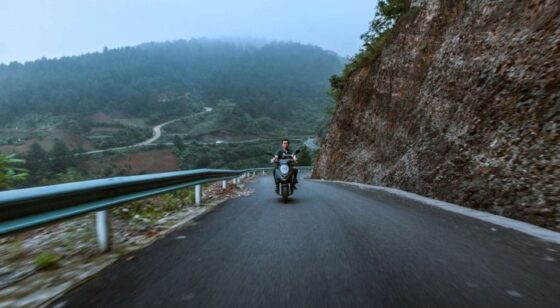
The technical wonder of the 41-minute unbroken sequence was a joy to witness. Going into the film, I was aware of this sequence but it was impactful to view different ways to depict a sequence without cutting.

3. Resurrection (2025)
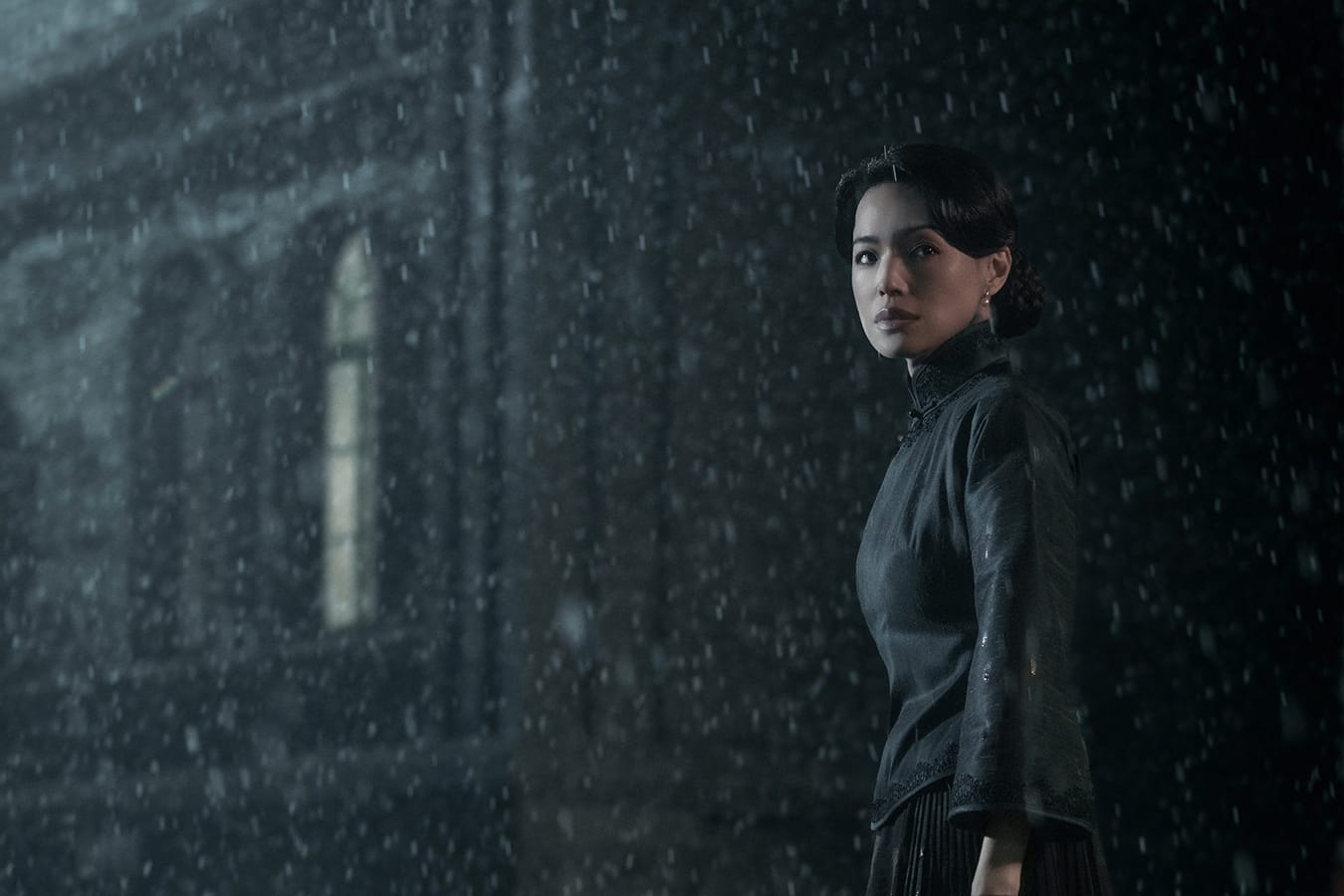
Resurrection, Courtesy Janus Films

Lovely to see a journey through cinema, especially the inclusion of silent cinema sequence which paid homage to German expressionist cinema. The final sequence of a changing China reminded me of Jia Zhang-ke’s cinema, especially Still Life (2006).

Other Reading

1. Dennis Lim, Film Comment

2. Shelly Kraicer on Kaili Blues, Cinema Scope

3. Nick Schager on Kaili Blues, Variety

Sunday, March 08, 2026

The Films of Kleber Mendonça Filho

Spotlight on the films of Kleber Mendonça Filho

Neighboring Sounds (O som ao redor) (2012)

Aquarius (2016)

Bacurau (2019, Kleber Mendonça Filho and Juliano Dornelles)

Pictures of Ghosts (2023)

The Secret Agent (2025)

It is an enriching experience to view a director’s collected works and understand their cinematic style. In the case of Kleber Mendonça, I was fortunate to view his first feature film Neighboring Sounds in a cinema and watch all subsequent films in order. I was a fan of the social commentary in that first film but there was a lingering sense of dread the film evoked. I wasn’t able to pin down that sense of dread and what style it was evoking. Mendonça’s second film Aquarius confirmed what that underlying layer was. Just to hammer home the point, Kleber Mendonça’s third film Bacurau spelled things out. Mendonça was a fan of genre films and layered his works with reworkings of horror, thriller elements. This sense of genre has a delicious presence in his recent film The Secret Agent, a film about real and imagined monsters. In The Secret Agent, the real monsters hide in the shadow but in a very creative homage to genre films of old, a terror emerges from the shadow to cause havoc on innocent people. This terror has political implications but in the newspaper columns, radio programs and people’s imagination, the fear of this terror takes hold displaying the real monsters. The genre homage is played upon by the film’s Indian release poster:


Once Upon a time in Recife

Recife forms a core unifying thread in Kleber Mendonça’s cinema as the director’s birth city is featured prominently in 4 of his 5 features to date and multiple short films. The exception is Bacurau but that film is shot in the state of Pernambuco, a state whose capital is Recife. Via these 5 features, Recife and the state of Pernambuco showcase monsters and terrors that haunt both urban and rural settings.

In Neighbouring Sounds, the film shows the fear that grips residents across the poverty divide when urban anxieties are heightened by outsiders, perhaps those arriving from rural parts or other urban centers. Aquarius shows the world of rapid development where the past is always in danger of being demolished for a shiny new future. In this case, the villains are land developers who are constantly looking for new avenues to increase their profit. Bacurau takes the fight for land, water and survival to extremes where the rich wealthy foreigners hunt the locals for fun. Interestingly, contemporary events around the world mean Bacurau feels an allegory of our current times. Pictures of Ghosts is the only documentary out of these 5 films and showcases a past where cinema played a vital part in people’s weekly social and cultural outings. The Secret Agent goes back to Brazil’s political past but this film’s look and feel would not have been possible without Pictures of Ghosts. Indeed, some frames of The Secret Agent look like those archived footage shown in Pictures of Ghosts.

Ranking of these 5 Kleber Mendonça Filho films:

1. Neighboring Sounds (2012)

Aided by a rich sound design & visuals, Kleber Mendonça Filho’s debut feature film ensures an immersive cinematic experience. A viewer gets a ringside seat in one of Recife’s neighbourhoods to witness the daily activities of the residents, including their morning and nightly routines. Depicting the everyday reality would have been good enough, but Kleber Mendonça Filho enhances the experience by adding layers of memories and nightmares with a few smart cuts. As a result, the multi-layered film contains a subtle sense of dread but in a much subtler note than Michael Haneke's Caché. This means that even when viewers witness harmless events in and around an apartment complex, there is a sense that something sinister is going to happen. The viewer can't be passive and is instead forced to examine each frame and its accompanying sound to know what the characters are up to.

2. The Secret Agent (2025)

The Secret Agent is easily the most accessible and cohesive of all Kleber Mendonça’s features to date. The smart decision to incorporate present times while depicting the past allows one to see the consequences of events over the course of a few decades. The film also shows how cinemas, once a vital part of society, become different spaces to heal people.

3. Bacurau (2019, Kleber Mendonça Filho and Juliano Dornelles)

In the near future, the small, isolated town of Bacurau becomes a setting for an epic battle for the ages. The inhabitants of the town are already struggling with lack of water and feel they are forgotten, a fact confirmed when they discover that their town is erased from the internet. The arrival of a few strangers jolts them into a heightened state of alert and soon they find themselves under attack from an international group of killers led by the experienced killer Micheal (Udo Kier). The killers are expecting easy prey but they aren’t aware of the town’s history or the residents’ usage of psychotropic drugs. The locals, led by Domingas (the legendary Sônia Braga), dig in and prepare for a bloody carnage.

Winner of a Jury Prize at Cannes, Bacurau is a scrumptious cocktail of an end of the world battle dipped in blood-soaked Spaghetti Westerns and garnished with political and sci-fi elements. This smart multi-layered political allegory is dressed in an exciting range of genres with references to Sergio Leone and John Carpenter’s films.

4. Aquarius (2016)

Even though the film is localized to a Brazilian apartment building, the events echo our current world of rapid development where the past is always in danger of being demolished for a shiny new future. In a way, the core message of this film has taken on more urgency in the decade since this film was released as fight for land has only intensified.

5. Pictures of Ghosts (2023)

A beautiful ode to Recife and cinemas of the past. The film shows how Recife has changed over the decades and once a city that teemed with cinemas now only has a few such operational cinemas. Many are abandoned or redone into other spaces. This is a scenario that is taking place across countless other cities across the world over the last few decades.