Spotlight on Nina Menkes
A long
overdue spotlight on Nina Menkes focuses on 5 of her 6 directed features to
date plus her second short film.
The Great Sadness of Zohara (1983, 38 min short)
Magdalena Viraga (1986)
Queen of Diamonds (1990)
The Bloody Child (1996)
Phantom Love (2007)
Dissolution (2010)
Note: This spotlight is missing her recent feature Brainwashed
(2022), which would have completed 6/6 of her feature films directed to date (this
doesn’t include Massacre, her co-directed 2005 doc).
The word ‘Visionary’ is so often used to describe the works
of a director that it feels overused and misrepresented. However, this word is
apt in the case of Nina Menkes as her distinctive style is uncompromising and
stands apart from her contemporaries. So far, she has only directed 6 feature
films over the span of 36 years. That works out to an average of 1 film per 6
years. Although, there is a significant gap of 12 years between Dissolution
and Brainwashed. Each film is unique on its own, but some common
threads/elements emerge over these 6 films in this spotlight.
Isolation, Alienation and a Female Perspective
Cinema is full of examples of isolated and alienated male
characters who are then driven to violence or self-destruction as a means of
coping with their situation. Nina Menkes offers a differing perspective by
focusing on isolated female characters. In her films, the female characters are
observed as they navigate their challenging environments and try to cope with
their lives. The films are stripped of any overdramatic moments or violence but
instead layered with dreams (such as Phantom Love), symbolism (Phantom
Love, Queen of Diamonds, Magdalena Viraga)
which allows an insight into the character’s emotional and mental state.
Interestingly, the only film from these 6 to feature an outright male lead (Dissolution)
does feature a violent act but that is kept off screen with the film instead
focusing on the daily boredom, isolation of the male character.
Experimental Narrative, Surrealism, Fantasy
Nina Menkes’ films are non-linear and don’t follow regular conventions
of a narrative structure. One won’t find a three-act structure in any of these
films. In addition, some of the films use dreams and symbolism to blur the
boundaries between reality and fantasy which helps give an insight into the
character’s mental state.
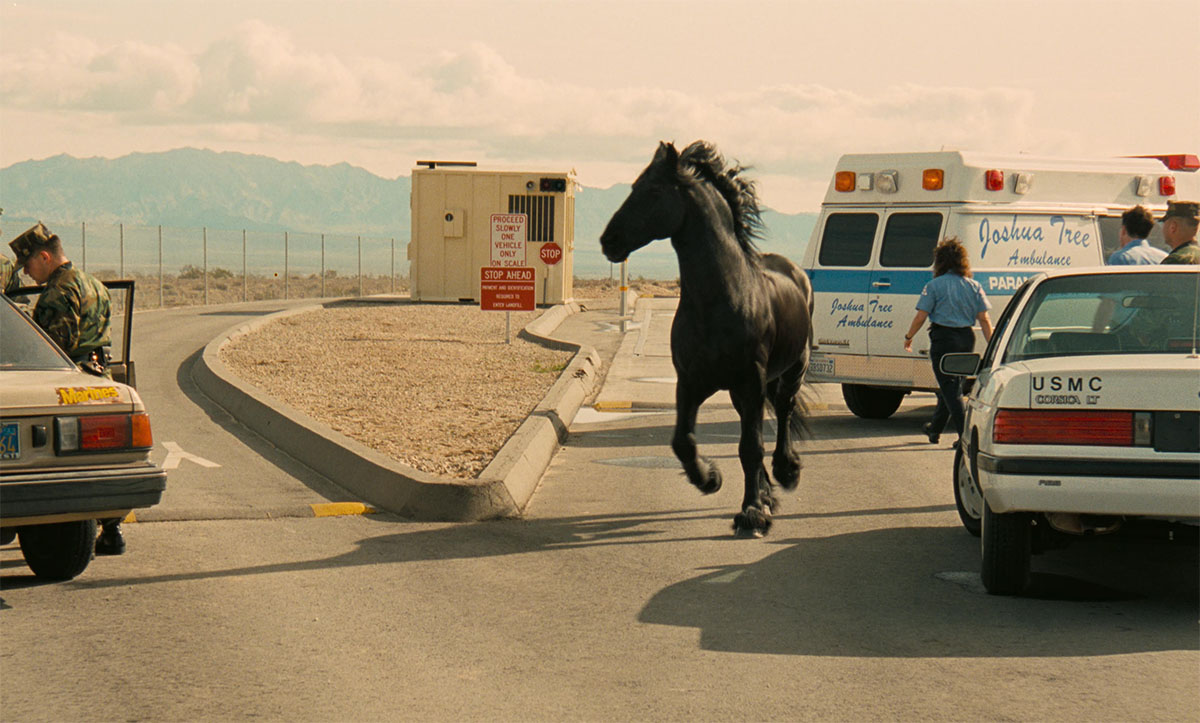
The Bloody Child is a perfect example to
contrast her style with that of other directors. The film is based on a real-life
event where a young US Marine killed his wife after his return from the Gulf War.
Many films have dealt with the violent aftermath of returning soldiers, yet Menkes
doesn’t present events in a straightforward narrative. Instead, the film uses
repeated scenes which emphasize the constant abuse of power and violence that
is drilled into the soldiers in their day-to-day operations, which seeps into
their core.
Collaboration with Tinka Menkes
A notable aspect of Menkes’s filmmaking is her immensely
creative collaboration with her sister, Tinka Menkes. Tinka acted in 5 of Nina’s
films: A Soft Warrior (Nina’s debut short), The Great
Sadness of Zohara, Magdalena Viraga, Queen of Diamonds,
The Bloody Child. In addition, the two sisters co-edited Queen of
Diamonds and The Bloody Child.
Ranking the films of Nina Menkes in order of preference:
1. Phantom Love (2007)
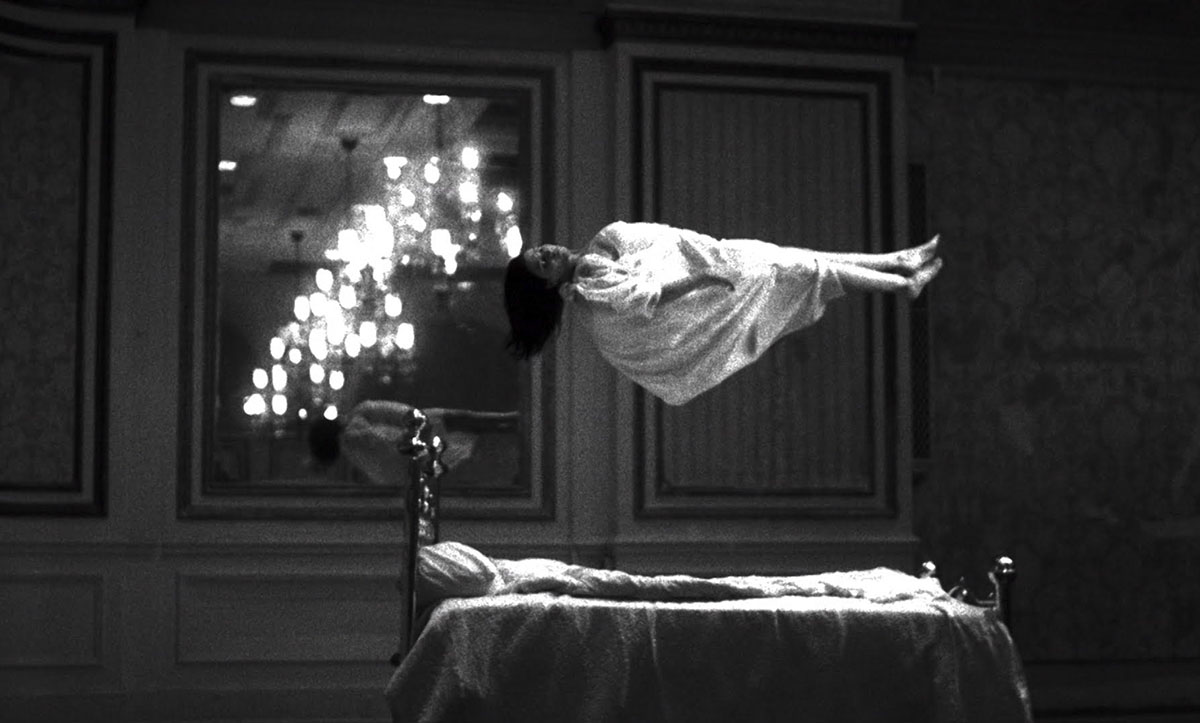 |
| Phantom Love, Courtesy Arbelos Films |
A hypnotic mesmerizing film that echoes shades of Béla Tarr
and David Lynch yet is clearly Menkes' distinct style. The usage of black and
white works perfectly as it helps give the illusion of events taking place in
the same location. Yet, it is still very hard to hide the distinctive look of
Rishikesh (India). The film contains many memorable images, one of them being snakes
in the hallway.
2. Magdalena Viraga (1986)
Nina’s debut feature film helps set the tone for her style:
non-linear structure, symbolism, minimal dialogue, use of repeated scenes to emphasize
mental state of characters.
3. Queen of Diamonds (1990)
 |
| Queen of Diamonds, Courtesy Arbelos Films |
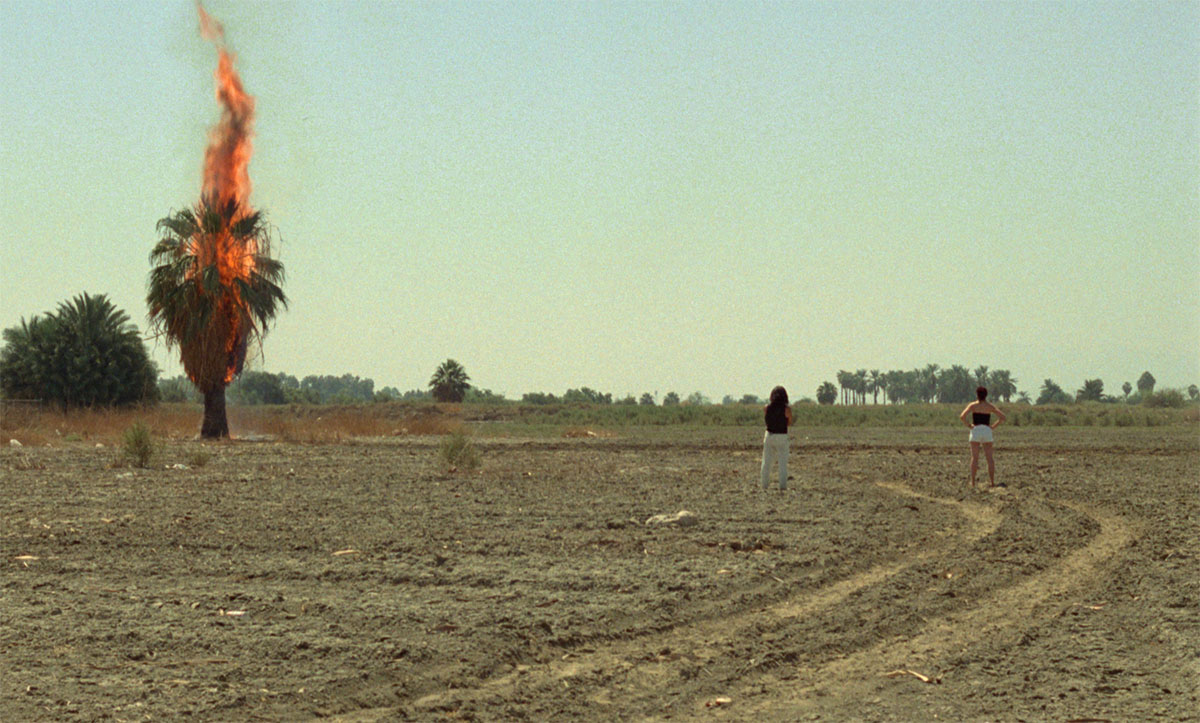
Las Vegas has never looked so different in a film! Majority
of the films set in Vegas glamorize the gambling and constant lights of the city,
yet Nina & Tinka Menkes showcase the dullness and repetitive aspect of
being a card dealer. Plus, the film contains many stellar images such as that
of the burning palm tree.
4. Dissolution (2010)
Loosely based on Dostoevsky’s Crime and Punishment,
Dissolution is the first of Nina Menkes’ films to feature a male
lead. Yet her style of using repeated images highlights the isolation of the
male character leading to his violent act.
5. The Great Sadness of Zohara (1983)
The film starts and ends in Jerusalem with a trip to North Africa
in the middle. It is hard to believe that this was Nina Menken’s student film
made on a shoe-string budget. The North African sequences reminded me of Oliver
Laxe’s North African set films such as You All Are Captains
(2010), Mimosas (2016) even though Menkes shot her film almost
three decades before Laxe made his debut.
6. The Bloody Child (1996)
 |
| The Bloody Child, Courtesy Arbelos Films |
The non-linear structure made me recall the experience of
Harun Farocki’s “Images of War” exhibition (2011-12). In Farocki’s
installation, a loop repeated images of a simulated war and it didn’t matter at
which point one started to see the film as one could get the intent behind the
simulation. Similarly, Menkes’ film showcases repeated images and one can get the
sense of proceedings based on just a few sequences.